0 Items
No products in the cart.
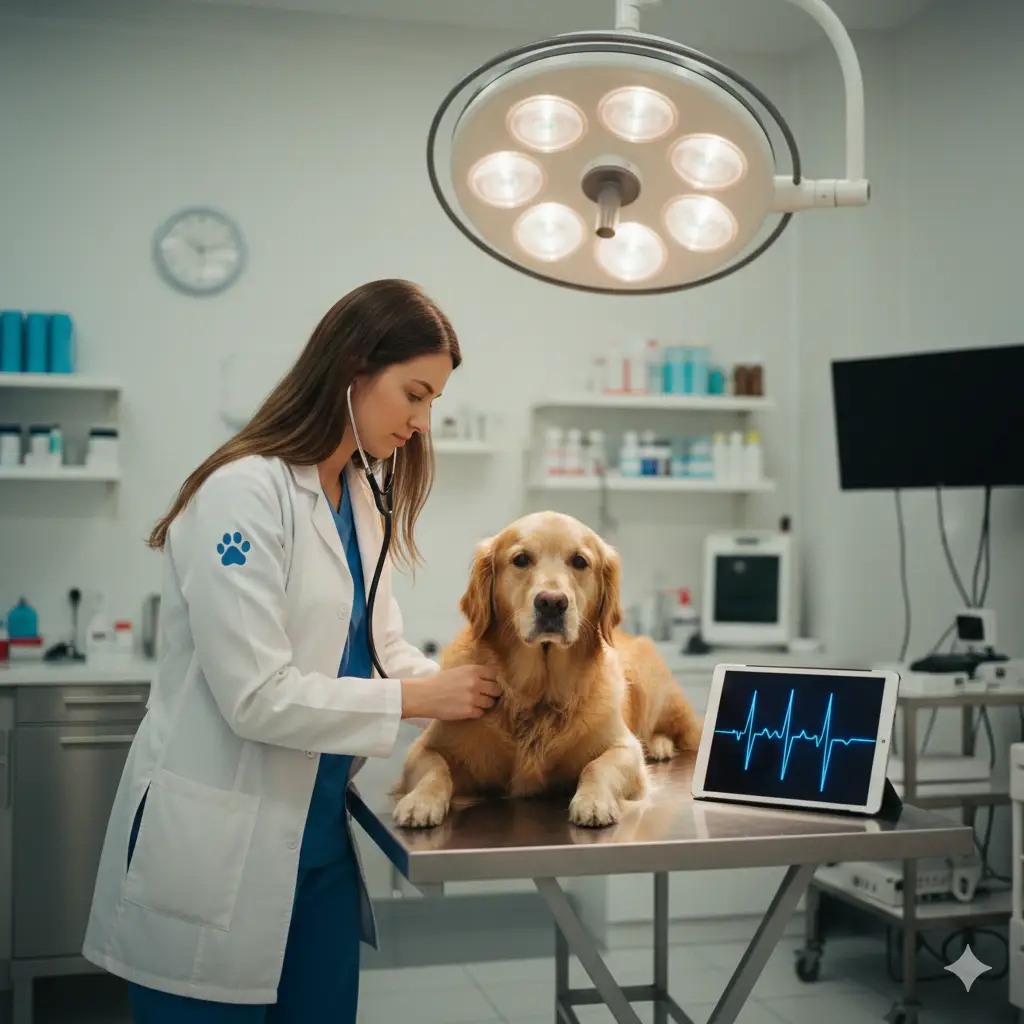
When you hear the term heart murmur in dogs, it can sound frightening at first. You might imagine loud noises or obvious warning signs. In reality, a heart murmur is usually very subtle and quiet. It is not something you can hear at home without special equipment.
A veterinarian detects a heart murmur by listening with a stethoscope during a routine exam. A normal heartbeat sounds like a steady “lub-dub” rhythm. When a heart murmur is present, that rhythm includes an extra sound caused by abnormal blood flow.
Most vets describe the sound as a soft whooshing, swishing, or humming noise between heartbeats. This sound happens when blood moves turbulently through the heart instead of flowing smoothly. Your dog does not feel this sound, and it does not cause pain.
Many dogs appear perfectly healthy when a heart murmur is first discovered. That is why regular veterinary checkups are important. Early detection allows monitoring before symptoms appear.
A veterinarian listens carefully to several areas of your dog’s chest during an exam. Each area corresponds to a different heart valve. This process helps identify where the abnormal sound is coming from.
Some heart murmurs in dogs are very faint and easy to miss. Others are louder and more noticeable right away. However, a louder murmur does not always mean a more serious heart problem. Loudness and severity are not always connected.
Veterinarians also pay attention to timing. A murmur may occur during a heartbeat, between beats, or continuously. These patterns help classify murmurs as systolic, diastolic, or continuous, which guides further testing.
Your dog’s position can affect how clearly the murmur is heard. Standing, lying down, or turning slightly may change the sound. This does not mean the murmur disappears. It simply becomes easier to detect from certain angles.
Not all heart murmurs in dogs sound the same. The sound depends on heart size, blood flow speed, and valve function. Even your dog’s breed and age can influence how the murmur sounds.
Small dogs often have faster heart rates, which can make murmurs sound lighter or quicker. Larger dogs may produce deeper or slower rhythms. Puppies sometimes have innocent murmurs that disappear as they grow.
Some murmurs sound smooth and gentle. Others sound rough or irregular. These sound qualities help veterinarians determine whether a murmur is likely harmless or linked to heart disease.
Stress or excitement can temporarily change heart rate. This may make a murmur easier to hear during a clinic visit. That is why vets evaluate the full health picture, not just the sound itself.
You cannot hear a heart murmur in dogs at home using your ear. The sound is too subtle and requires a stethoscope. However, you may notice indirect signs related to heart function over time.
Some dogs tire more easily during walks or play. Others may breathe faster or cough occasionally, especially at night. Appetite changes or lower energy levels may also appear.
Many dogs with mild heart murmurs show no symptoms at all. They live normal, happy lives with regular monitoring. That is why early detection is so valuable.
If your vet detects a murmur, they may recommend tests like chest X-rays or an echocardiogram. These tests reveal what the sound means inside the heart. The murmur itself is a clue, not a diagnosis.
Learning what a heart murmur in dogs sounds like helps reduce fear and confusion. The sound itself is not an emergency. It is simply information that guides care decisions.
When you understand the cause of the sound, you feel more confident discussing options with your veterinarian. Knowledge replaces panic with preparation.
Many dogs live long, healthy lives with monitored heart murmurs. Awareness allows you to support your dog’s heart health properly.
Understanding the sound is the first step toward responsible, informed pet care.
A heart murmur in dogs does not have a single cause. The reason behind the sound often depends on your dog’s age. Puppies, adult dogs, and senior dogs develop murmurs for different reasons. Understanding these age-related causes helps you respond calmly instead of worrying unnecessarily.
Not all heart murmurs signal disease. Some are temporary and harmless, while others indicate an underlying heart condition. Your veterinarian uses age, breed, and symptoms to narrow down possible causes. Knowing what is common at each life stage gives you clarity and confidence.
This section explains why heart murmurs appear in young dogs versus senior dogs, using simple language without oversimplifying the science.
When a heart murmur in dogs is found in puppies, it often turns out to be innocent. Innocent murmurs happen because a puppy’s heart and blood vessels are still developing. Blood may flow faster or less smoothly during growth.
These murmurs usually sound soft and disappear by six months of age. Puppies with innocent murmurs act completely normal. They eat well, play actively, and grow at a healthy pace. No treatment is needed, only monitoring.
However, not all murmurs in young dogs are harmless. Some puppies are born with congenital heart defects. These defects affect how blood moves through the heart. Examples include valve malformations or abnormal openings between heart chambers.
Congenital heart conditions often cause louder or persistent murmurs. These murmurs do not fade as the puppy grows. Your veterinarian may recommend further testing if the sound remains after several months.
Certain breeds are more prone to congenital heart issues. Small breeds and some purebred dogs have higher risks. Early diagnosis allows better long-term planning and care.
Most puppies with heart murmurs grow up healthy. The key is identifying whether the murmur is innocent or structural. That distinction guides next steps without unnecessary panic.
In adult dogs, a heart murmur in dogs may appear due to changes in heart function over time. These murmurs may develop gradually rather than being present from birth.
One common cause is valve degeneration. Heart valves may not close tightly, allowing blood to leak backward. This leakage creates turbulent blood flow that produces a murmur.
Some adult dogs develop murmurs related to infection or inflammation. Conditions affecting heart tissue can temporarily change blood flow patterns. Treating the underlying problem may reduce or eliminate the murmur.
Anemia can also cause murmurs in dogs of any age. Low red blood cell levels force the heart to pump harder. Increased blood flow speed creates audible turbulence. Correcting anemia often resolves the murmur.
Adult dogs may not show obvious symptoms at first. This is why routine exams remain important even for seemingly healthy pets. Early detection allows better monitoring and care planning.
Senior dogs are the most likely group to develop a heart murmur in dogs linked to disease. Age-related changes in heart structure and function become more common over time.
The most frequent cause is degenerative valve disease. Valves weaken and leak gradually as dogs age. This condition is especially common in small and toy breeds.
Another possible cause is cardiomyopathy, which affects the heart muscle itself. The heart may become enlarged or weakened, reducing efficient blood flow. Murmurs develop as blood movement becomes irregular.
High blood pressure can also contribute to murmurs in older dogs. Increased pressure forces the heart to work harder. Over time, this strain affects valves and muscle tissue.
Senior dogs may show subtle signs such as fatigue, coughing, or slower activity. These signs develop gradually and are often mistaken for normal aging. Monitoring changes helps identify heart issues earlier.
Age alone does not determine severity. Some senior dogs live many years with mild murmurs and proper care. Others need medication to support heart function.
Age provides important context when evaluating a heart murmur in dogs. The same sound can mean different things in different life stages. A murmur in a puppy may be harmless, while a new murmur in a senior dog deserves closer attention.
Veterinarians combine age with physical exams and diagnostic tests. Tools like echocardiograms reveal whether the murmur reflects structural heart disease. The murmur itself is only a starting point.
Understanding age-related causes helps you ask better questions during vet visits. It also prevents unnecessary fear when murmurs are detected early.
Not every heart murmur in dogs requires treatment. Many only need regular monitoring. Others benefit from medication or lifestyle adjustments.
Young dogs with innocent murmurs usually outgrow them. Adult dogs with mild murmurs may only need annual checkups. Senior dogs with progressive disease often respond well to early intervention.
The goal is not to silence the murmur. The goal is to support heart function and quality of life. Early understanding leads to better outcomes.
Learning the common causes of heart murmur in dogs removes uncertainty. You stop imagining worst-case scenarios and start focusing on facts. Knowledge allows you to work confidently with your veterinarian.
Heart murmurs are information, not a verdict. With proper monitoring and care, many dogs live long, happy lives.
Understanding age-related causes helps you become a proactive, informed dog owner.
When your veterinarian mentions a heart murmur in dogs, it can feel alarming at first. You may immediately worry about serious heart disease. In reality, a heart murmur is only a clue, not a final diagnosis. Vets follow a careful process to understand what the sound means for your dog’s health.
Diagnosis focuses on identifying the cause, severity, and impact of the murmur. Some murmurs are harmless and require only monitoring. Others need further testing or treatment. Each step helps remove uncertainty and guide the right care.
Diagnosis always starts with a physical exam. Your vet listens to your dog’s heart using a stethoscope. A heart murmur in dogs sounds like a soft whooshing or rushing noise between heartbeats.
The vet notes how loud the murmur is and where it is heard most clearly. Murmurs are often graded on a scale, which helps estimate severity. Softer murmurs may be mild, while louder ones often need more testing.
Your dog’s age, breed, and overall health also matter. Puppies often have innocent murmurs, while senior dogs are more likely to develop heart disease. Breed history can point toward valve problems or inherited conditions.
Your vet will also ask about symptoms like coughing, low energy, fainting, or breathing changes. These details help determine whether the murmur is affecting daily life or not.
If more information is needed, vets use imaging and tests to look deeper. Chest X-rays are often the next step. They show heart size and lung condition, helping detect enlargement or fluid buildup.
The most accurate test for a heart murmur in dogs is an echocardiogram. This ultrasound shows the heart in motion. It reveals valve function, chamber size, and abnormal blood flow patterns.
An echocardiogram helps identify whether the murmur comes from valve disease, congenital defects, or heart muscle problems. It is painless and provides detailed answers that guide treatment decisions.
Blood tests may also be used to rule out anemia or infection. In some cases, blood pressure checks or an ECG help detect rhythm problems that accompany murmurs.
No single test gives the full picture. Vets combine exam findings, test results, and your dog’s symptoms to understand the murmur fully. This step-by-step approach avoids unnecessary treatment and reduces stress for your dog.
Some dogs only need regular monitoring. Others benefit from medication or lifestyle adjustments. Diagnosis ensures care matches your dog’s specific condition.
Understanding the process helps you feel informed instead of overwhelmed. A heart murmur in dogs does not automatically mean a shortened life. Many dogs live long, comfortable lives with proper monitoring and support.
Once the cause is identified, your vet can explain what to expect moving forward. Mild murmurs may never progress. More serious conditions can often be managed successfully with early care.
Diagnosis gives you clarity and control. You know what signs to watch for and when to follow up. Most importantly, it allows your dog to receive the right care at the right time.
With proper diagnosis and guidance, a heart murmur becomes manageable, not frightening.
Hearing that your dog has a heart murmur in dogs can trigger immediate worry. You may assume treatment must start right away. In reality, not every murmur requires medication or aggressive intervention. Some murmurs simply need regular monitoring and nothing more.
Veterinarians decide between monitoring and treatment based on cause, severity, symptoms, and progression risk. Understanding this difference helps you feel calmer and more confident about your dog’s care plan. The goal is always to support quality of life, not over-treat unnecessarily.
In many cases, monitoring is the safest and smartest option. Mild heart murmurs, especially those without symptoms, often do not affect a dog’s daily life. Puppies frequently have innocent murmurs that disappear as the heart matures.
A heart murmur in dogs that is soft, stable, and symptom-free may only require routine checkups. Your vet listens during annual exams to ensure the sound does not worsen. No medication is needed when heart function remains normal.
Monitoring is also common when diagnostic tests show no structural heart disease. If the heart valves and chambers look healthy, treatment may offer no benefit. In these situations, observation avoids unnecessary side effects or stress.
Senior dogs may also be monitored if the murmur is mild and slow-progressing. If your dog eats well, breathes normally, and stays active, monitoring protects comfort without medical overload.
Treatment becomes necessary when a heart murmur starts affecting the heart’s ability to work efficiently. Vets look for symptoms that suggest the murmur is more than an innocent sound. These signs guide treatment decisions carefully.
Common warning signs include coughing, fatigue, rapid breathing, or exercise intolerance. Some dogs may faint or show decreased appetite. These symptoms indicate the heart is struggling to circulate blood effectively.
If imaging tests reveal valve disease, heart enlargement, or fluid buildup, treatment is often recommended. A progressing heart murmur in dogs linked to heart disease benefits from early intervention. Treatment helps slow progression and relieve strain on the heart.
Medication does not cure heart disease, but it can dramatically improve comfort and longevity. Treating early symptoms prevents emergency situations and improves daily quality of life.
Veterinarians never rely on murmur sound alone. They combine exam findings, test results, and lifestyle factors before recommending treatment. This personalized approach avoids both under-treatment and over-treatment.
The murmur grade helps estimate severity, but symptoms matter more. A loud murmur without symptoms may still only require monitoring. A softer murmur with symptoms may need treatment sooner.
Age, breed, and activity level influence decisions as well. Some breeds are prone to progressive valve disease and require closer follow-up. Active dogs may show symptoms earlier due to higher physical demand.
Follow-up schedules play a key role. Dogs under monitoring usually receive rechecks every six to twelve months. Dogs on treatment need more frequent evaluations to adjust medication safely.
Choosing monitoring or treatment at the right time protects your dog’s future health. Waiting too long to treat can allow heart disease to progress silently. Treating too early may cause unnecessary stress or side effects.
A balanced plan keeps your dog comfortable while avoiding panic. Many dogs with a heart murmur in dogs live long, happy lives with proper care. Monitoring catches changes early, while treatment supports the heart when needed.
Understanding this balance helps you trust your vet’s recommendations. You become an informed partner in your dog’s health journey. With the right approach, a heart murmur becomes manageable, not overwhelming.




Leave a comment